
Back to Comics
Comic
Caste has a cost: who profits and who pays?
Ms Meghna asks her class how landless agricultural families survived, and two students answer. Ajay sets out the work and the wages; Mughil, drawing on her grandmother, shows what caste added on top of the poverty.
- Credits
- Ambedkar King Study CircleGail Omvedt — Source text, “Towards a Marxist Analysis of Caste”
- Length
- 37panels
- Published
- December 22, 2025
- Caste discrimination
Every panel carries a transcript of the words drawn inside it, and can be opened full screen. Use the arrow keys to move between panels once one is open.
Panel 1 of 37 Transcript
- ThinksCaste has a cost: who profits and who pays?
Panel 2 of 37 Transcript
- CaptionMs Meghna's classes were always thought-provoking
- Ms MeghnaAlright- we have now talked about agriculture and agriculture labour. I want you all to now think deeply about the Indian families which were poor and landless. What hardships did they face?
Panel 3 of 37 Transcript
- Ms MeghnaHow did they survive these economic hardships? How did they educate their children? What kinds of work did the women of the household do?
Panel 4 of 37 Transcript
- CaptionAnd her assignments were always interesting
- Ms MeghnaTalk to your parents and grandparents if possible... read up on the internet, and really put yourselves in the shoes of this farmer family. Tomorrow, each group will select one person who will come prepared with a small presentation on how you think this family lived back then!
Panel 5 of 37 Transcript
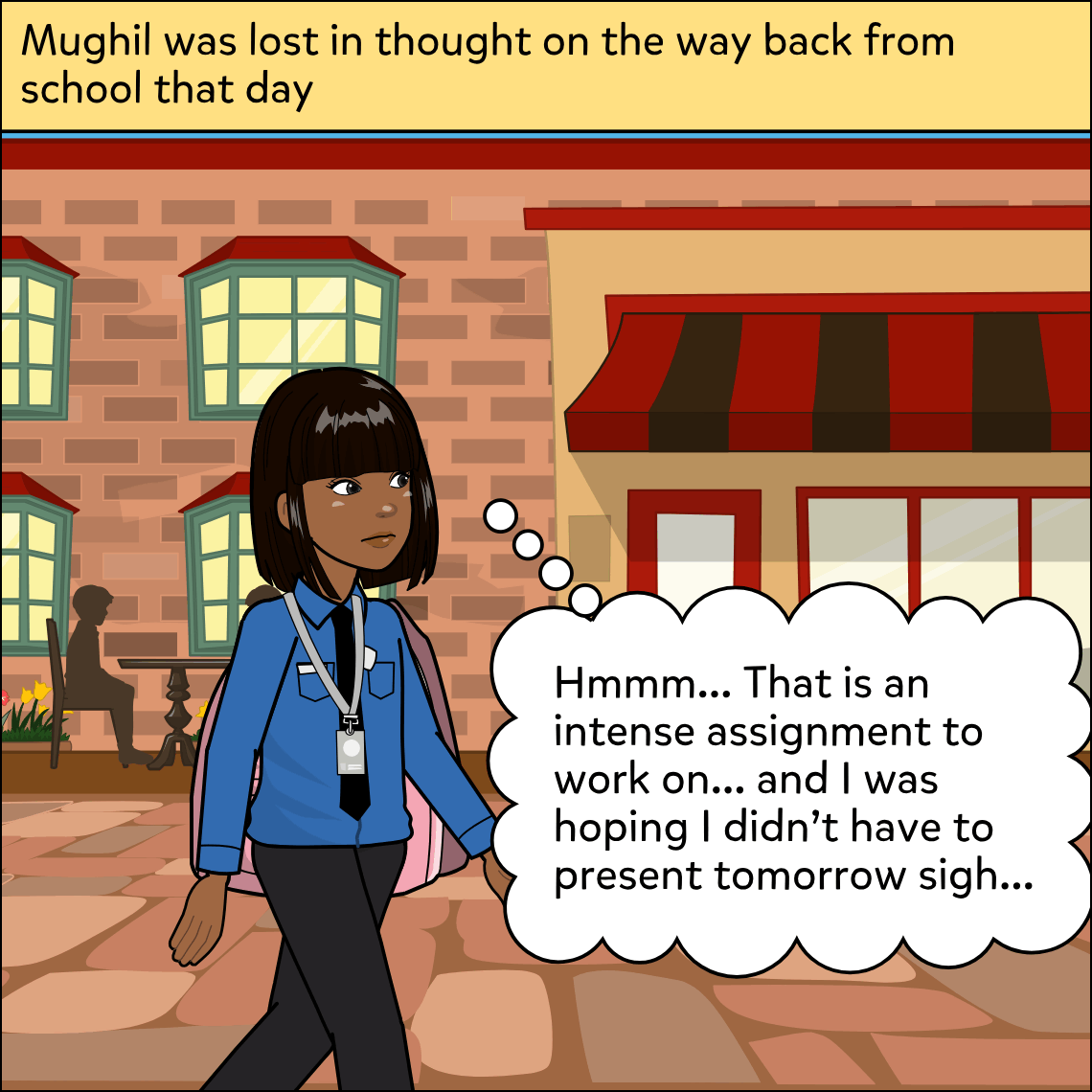
- CaptionMughil was lost in thought on the way back from school that day
- ThinksHmmm... That is an intense assignment to work on... and I was hoping I didn't have to present tomorrow sigh...
Panel 6 of 37 Transcript
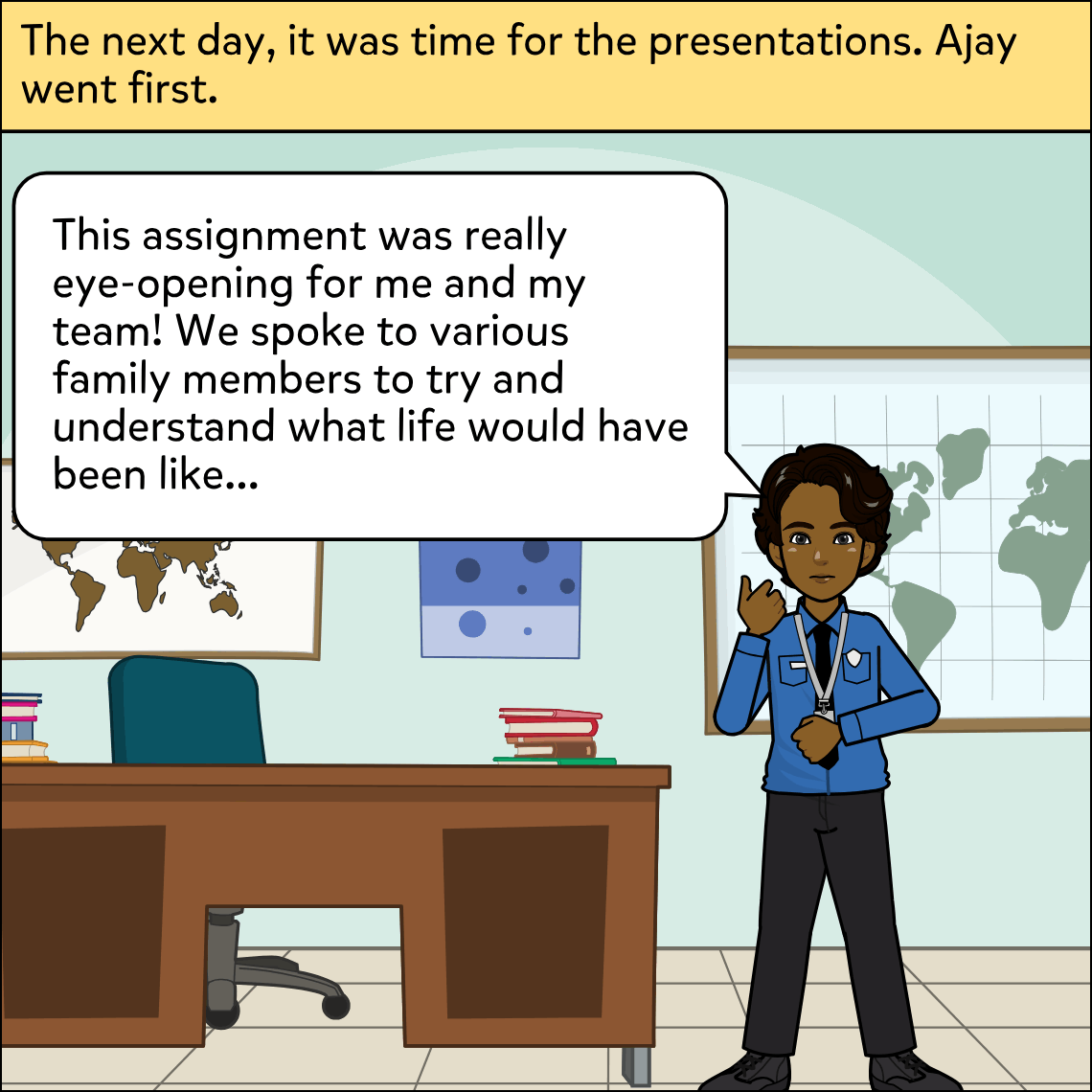
- CaptionThe next day, it was time for the presentations. Ajay went first.
- AjayThis assignment was really eye-opening for me and my team! We spoke to various family members to try and understand what life would have been like...
Panel 7 of 37 Transcript
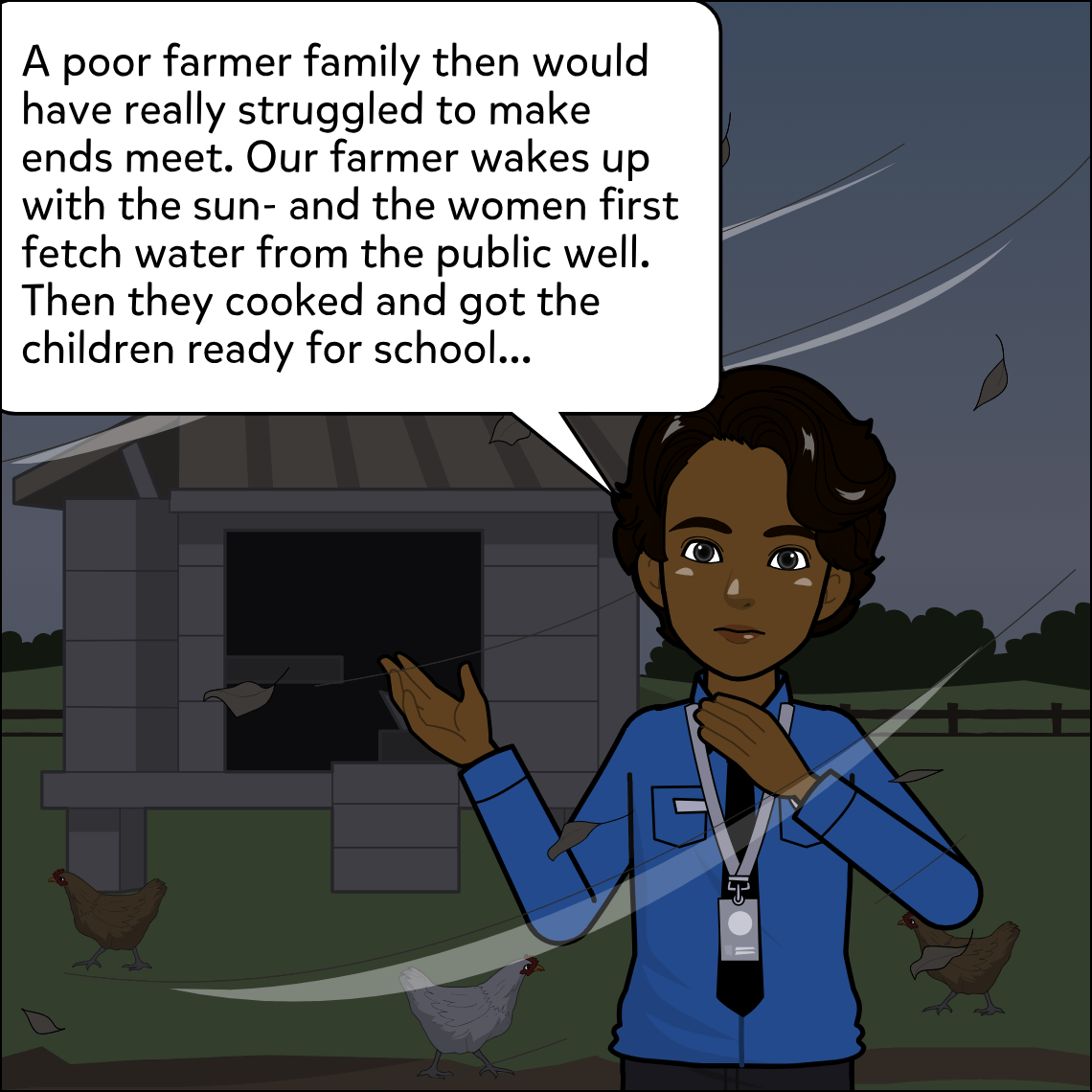
- AjayA poor farmer family then would have really struggled to make ends meet. Our farmer wakes up with the sun- and the women first fetch water from the public well. Then they cooked and got the children ready for school...
Panel 8 of 37 Transcript
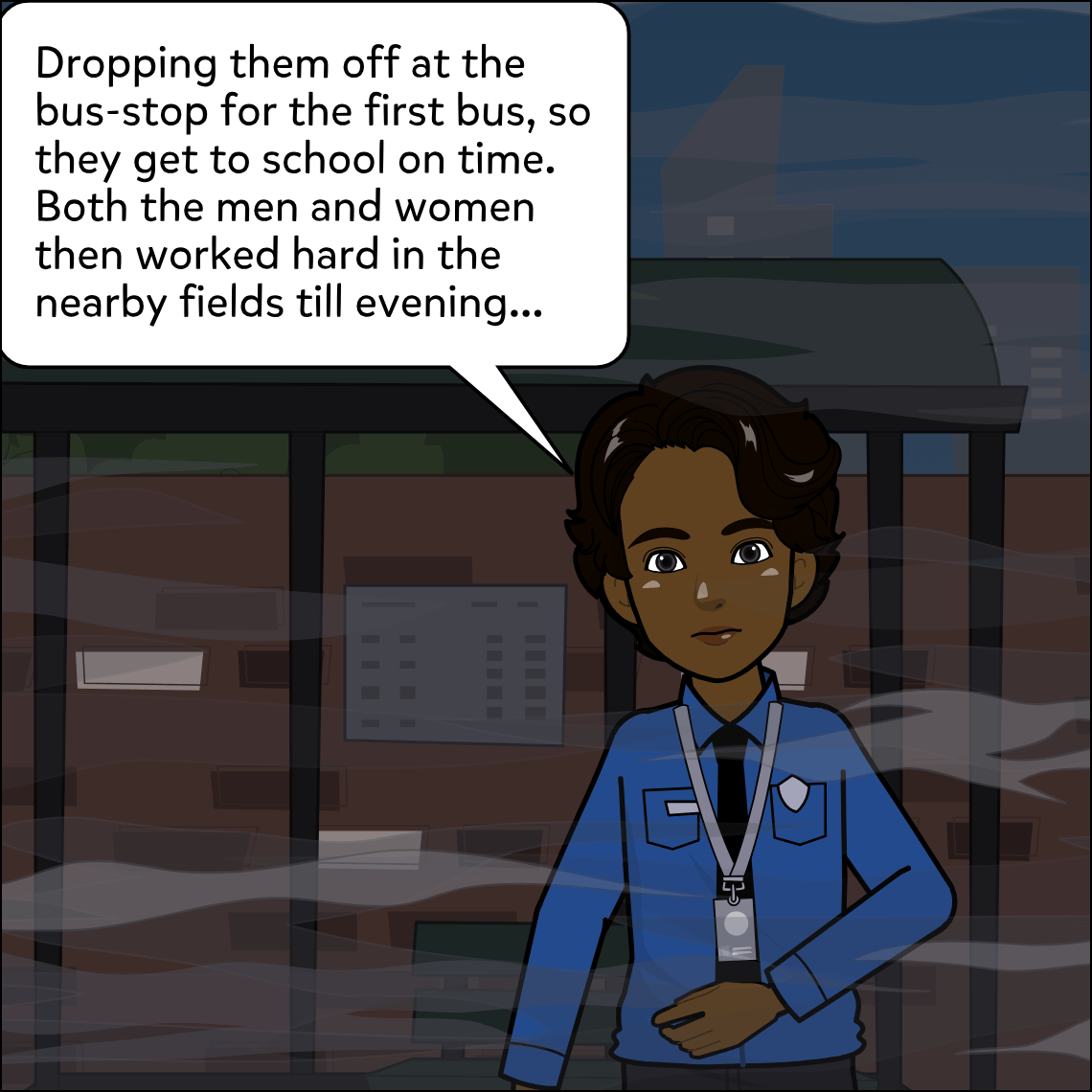
- AjayDropping them off at the bus-stop for the first bus, so they get to school on time. Both the men and women then worked hard in the nearby fields till evening...
Panel 9 of 37 Transcript
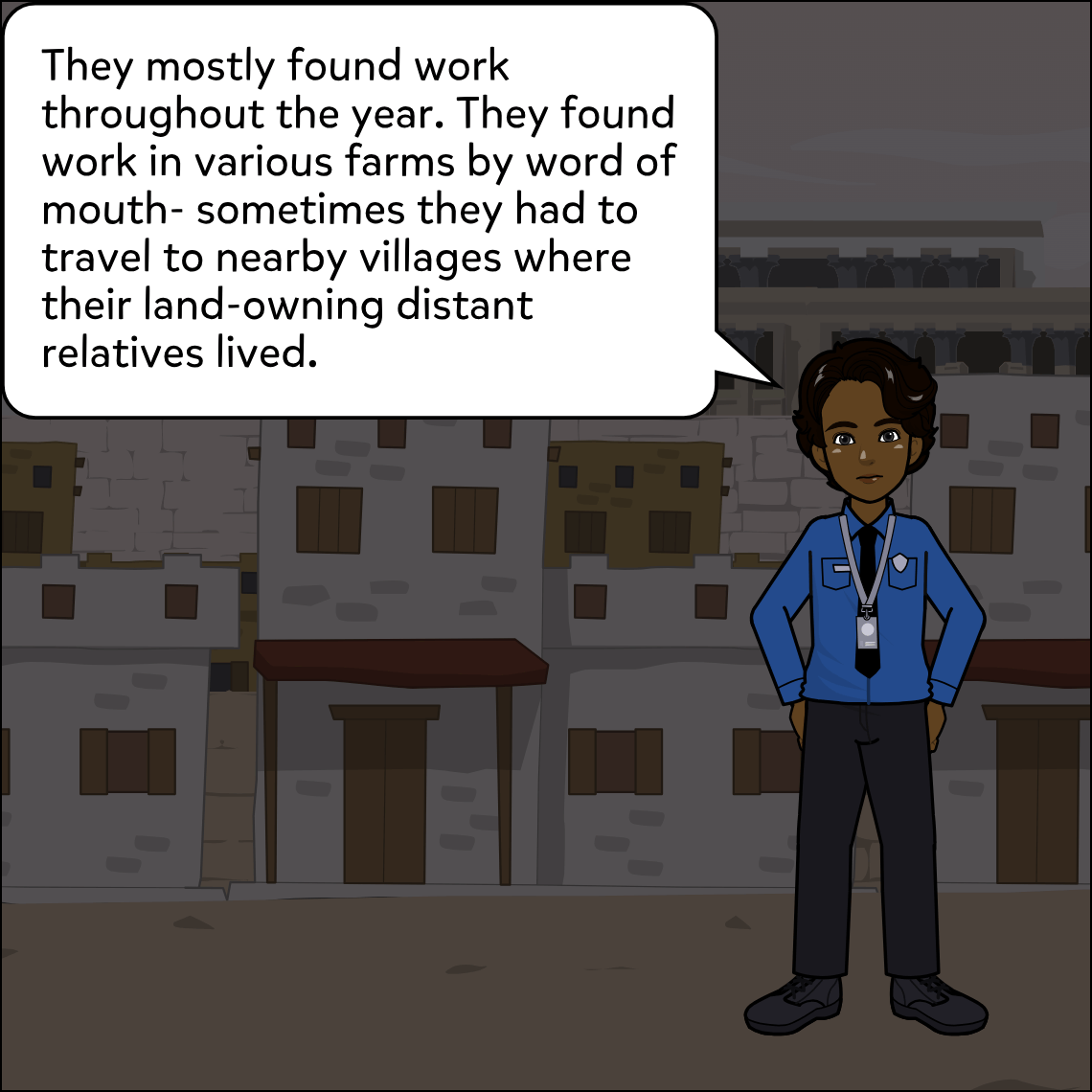
- AjayThey mostly found work throughout the year. They found work in various farms by word of mouth- sometimes they had to travel to nearby villages where their land-owning distant relatives lived.
Panel 10 of 37 Transcript
- AjayIt was necessary to work hard throughout the year... and with this sheer hard work, many families did manage to educate their kids so they could have a better future.
Panel 11 of 37 Transcript
- CaptionMughil was to present next. She had assumed that she wouldn't have much more to add after Ajay... but she was surprised that that was NOT the case
- MughilI think Ajay painted an excellent picture of life back then... But there were some details that my grandmother had mentioned that I want to talk about.
Panel 12 of 37 Transcript
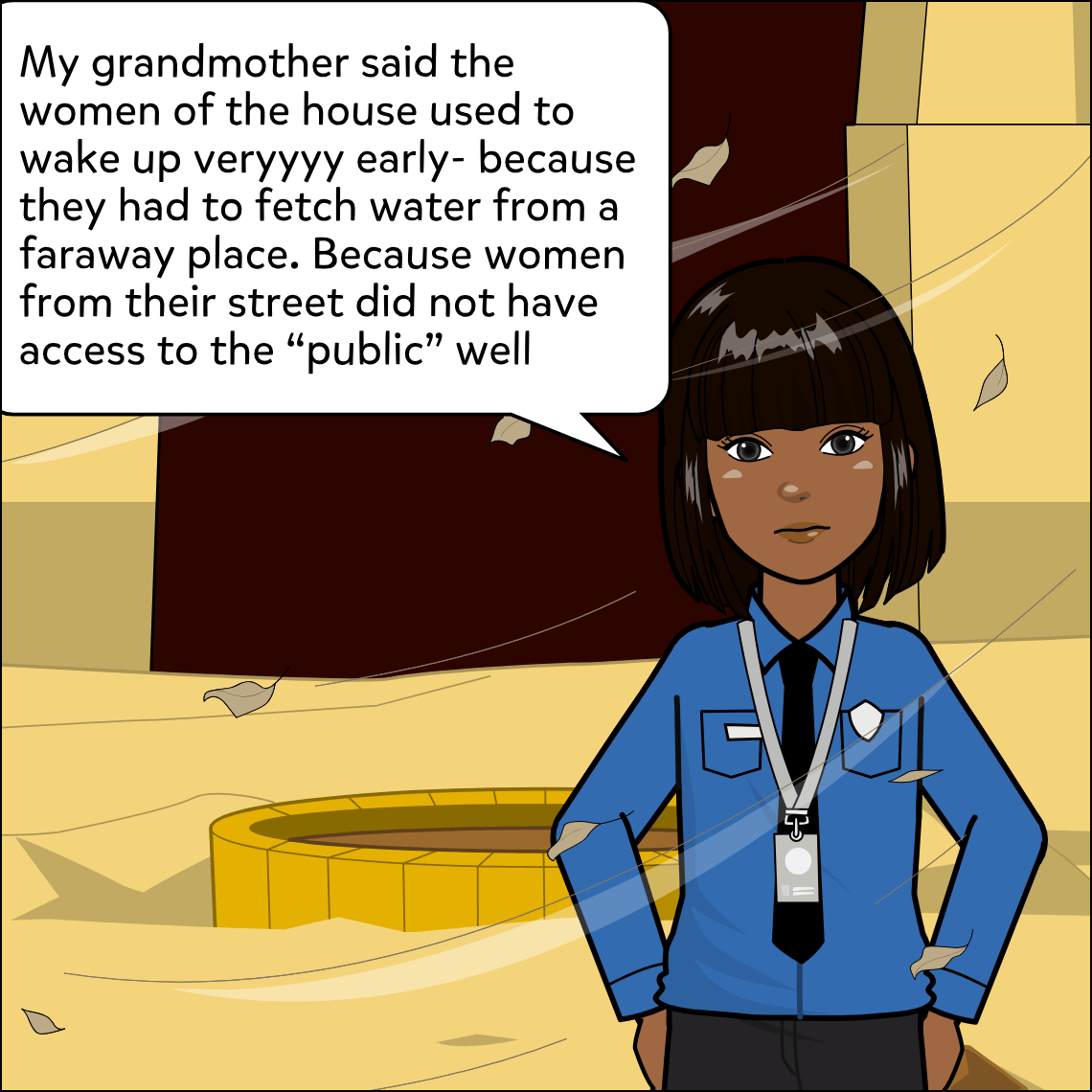
- MughilMy grandmother said the women of the house used to wake up veryyyy early- because they had to fetch water from a faraway place. Because women from their street did not have access to the "public" well
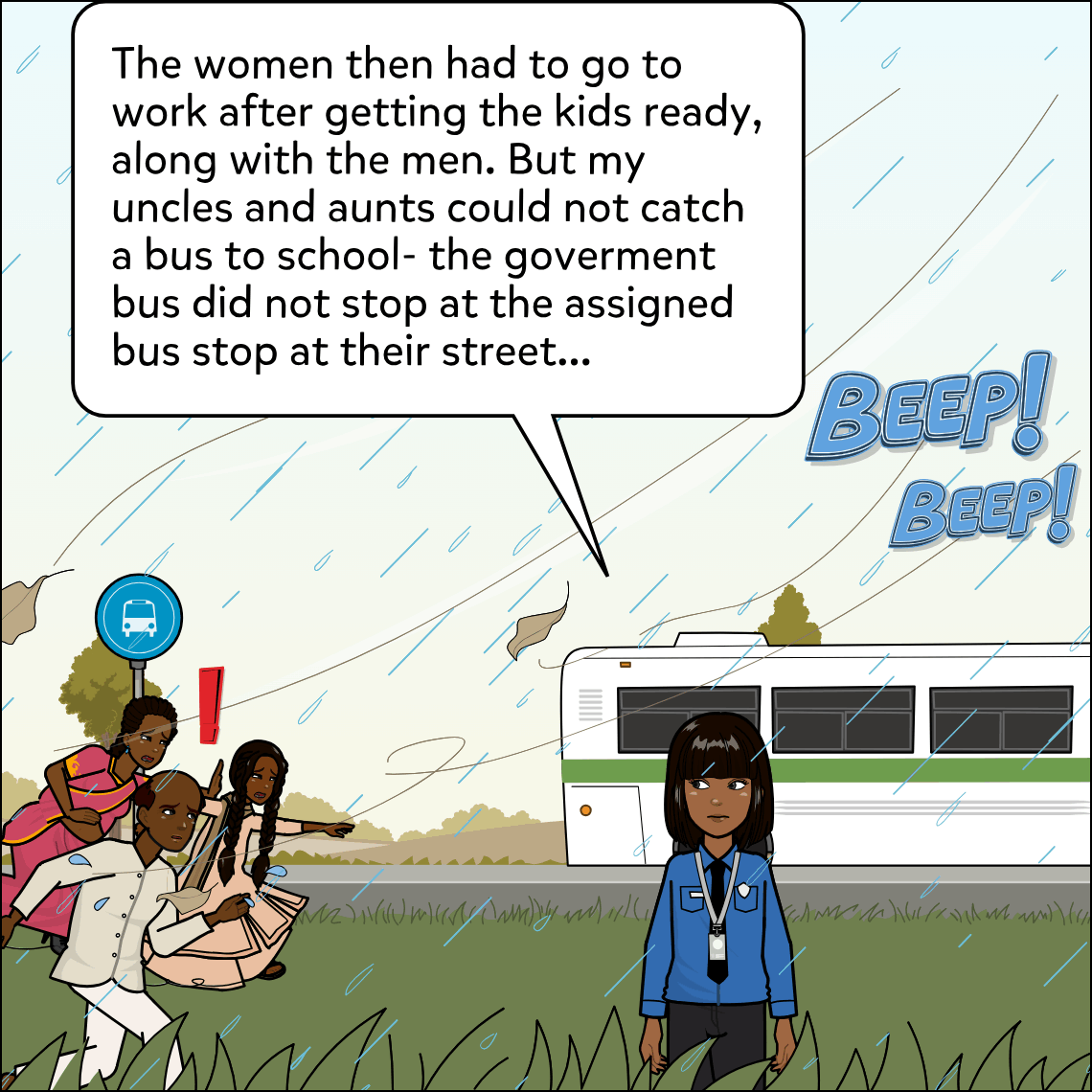
Panel 13 of 37 Transcript
- MughilThe women then had to go to work after getting the kids ready, along with the men. But my uncles and aunts could not catch a bus to school- the goverment bus did not stop at the assigned bus stop at their street...
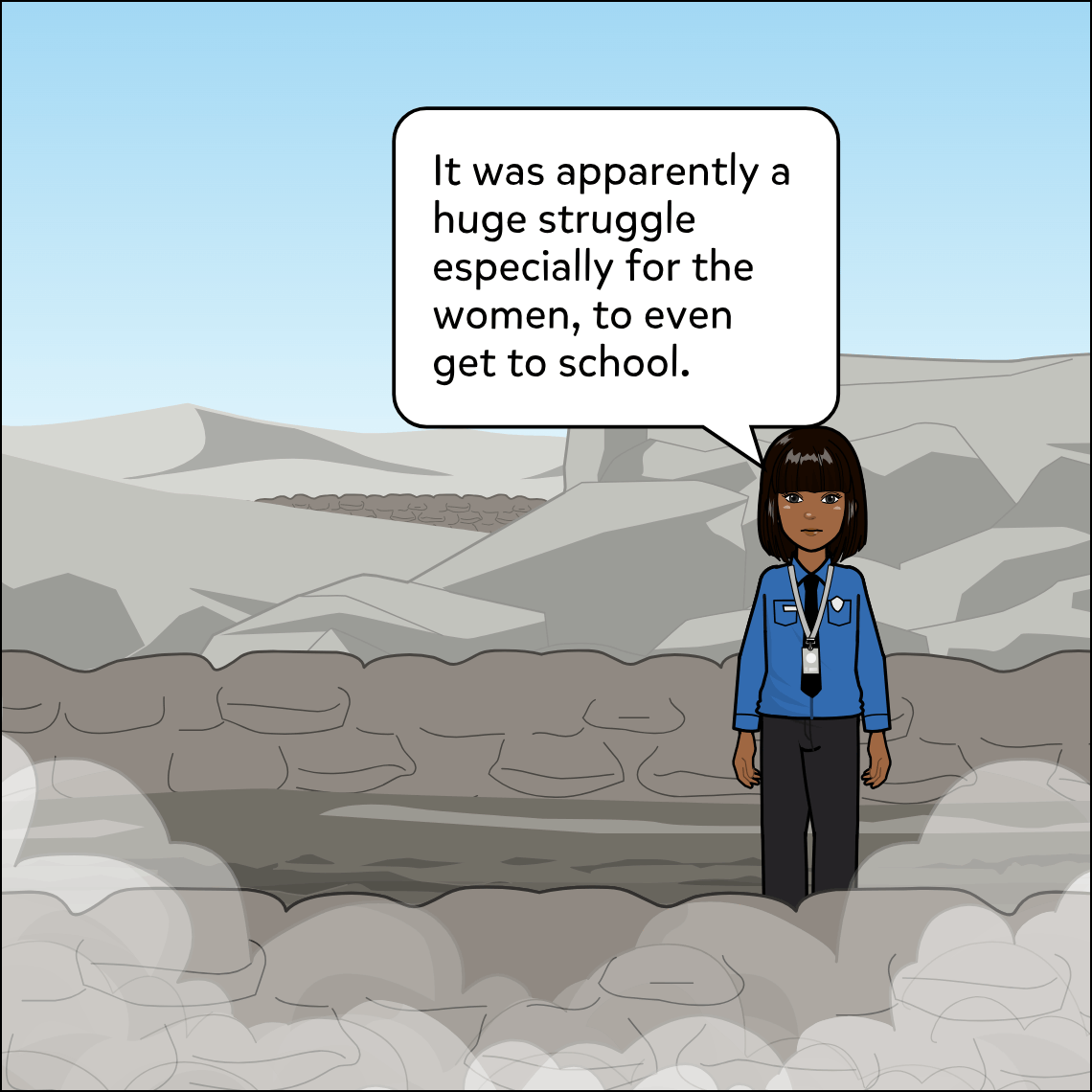
Panel 14 of 37 Transcript
- MughilIt was apparently a huge struggle especially for the women, to even get to school.
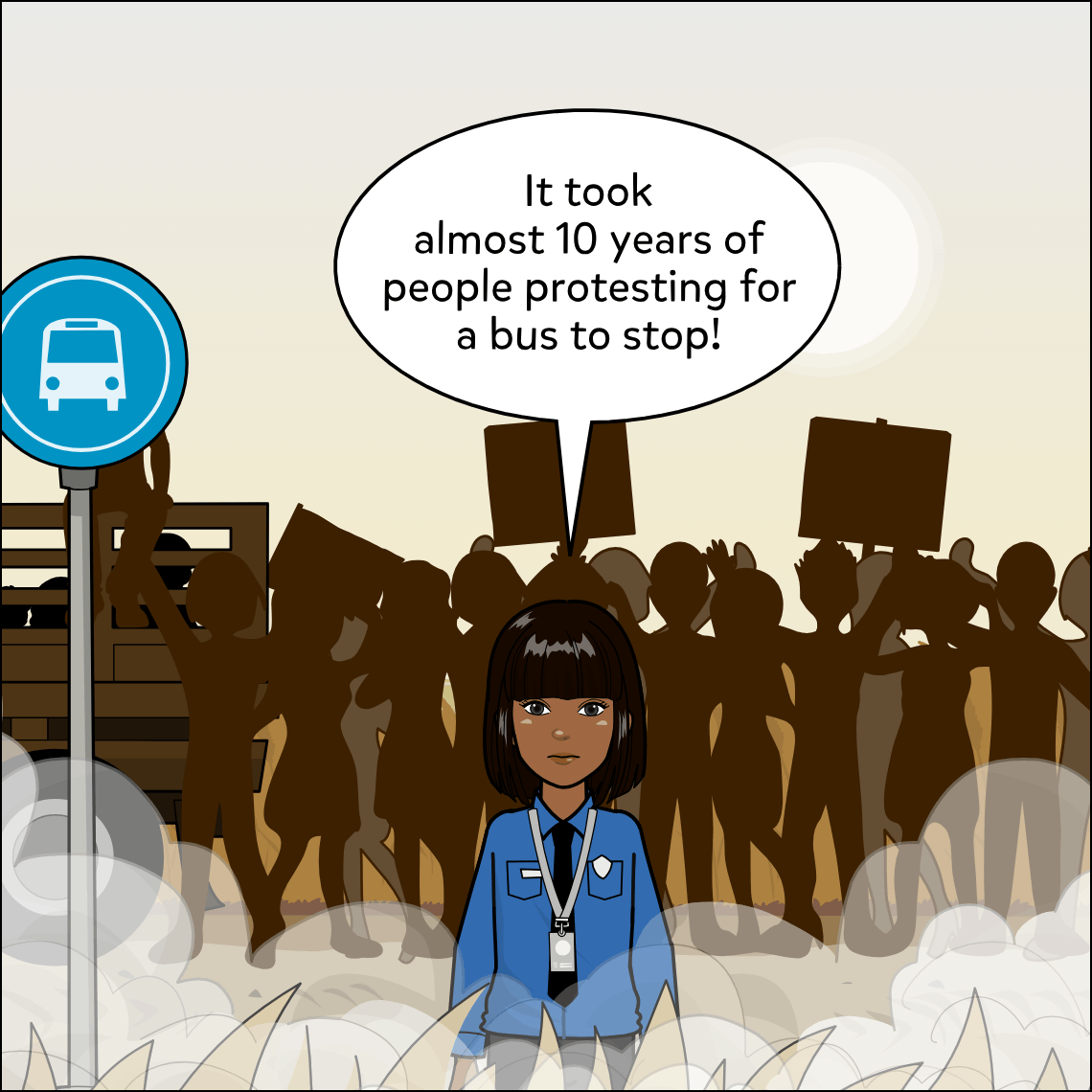
Panel 15 of 37 Transcript
- MughilIt took almost 10 years of people protesting for a bus to stop!
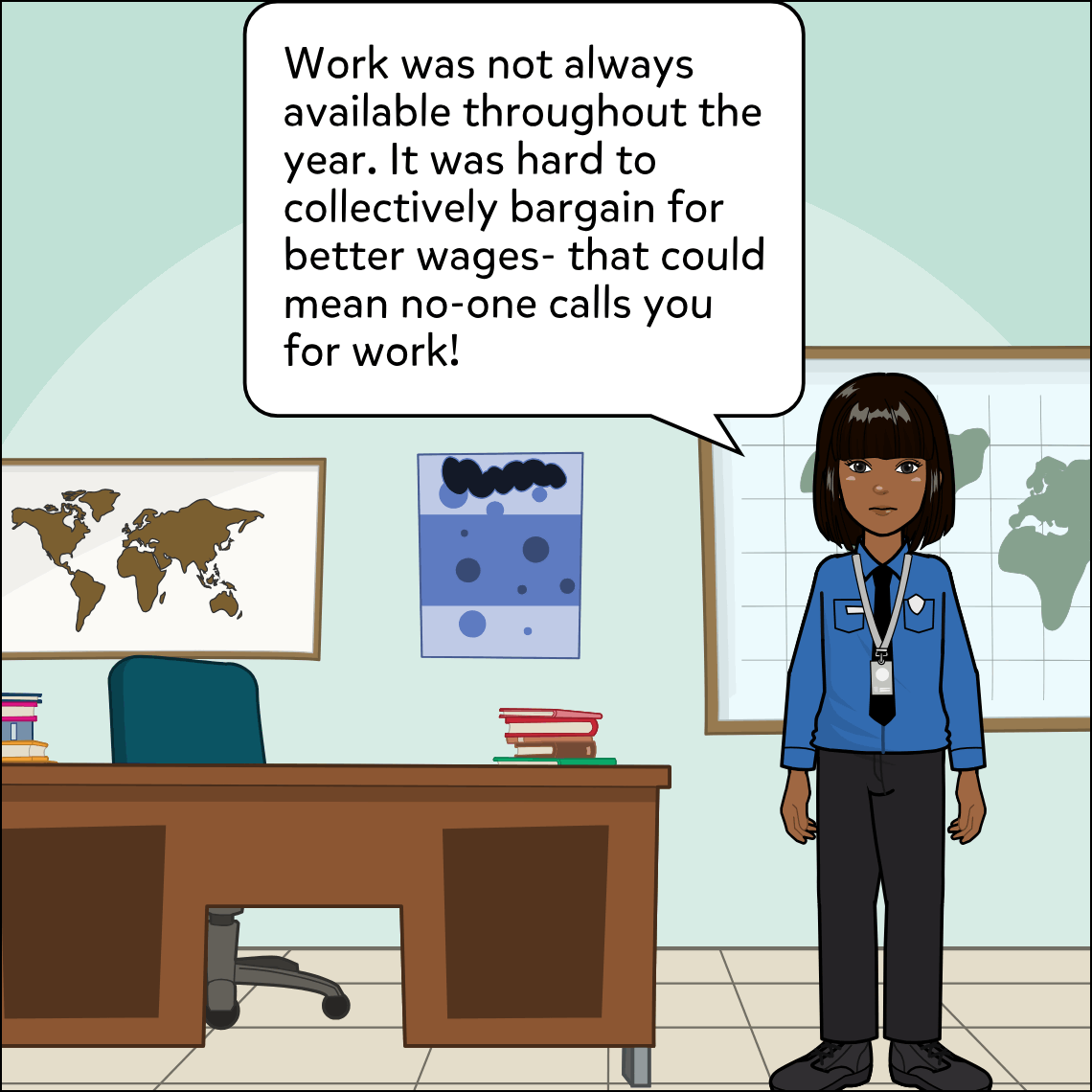
Panel 16 of 37 Transcript
- MughilWork was not always available throughout the year. It was hard to collectively bargain for better wages- that could mean no-one calls you for work!
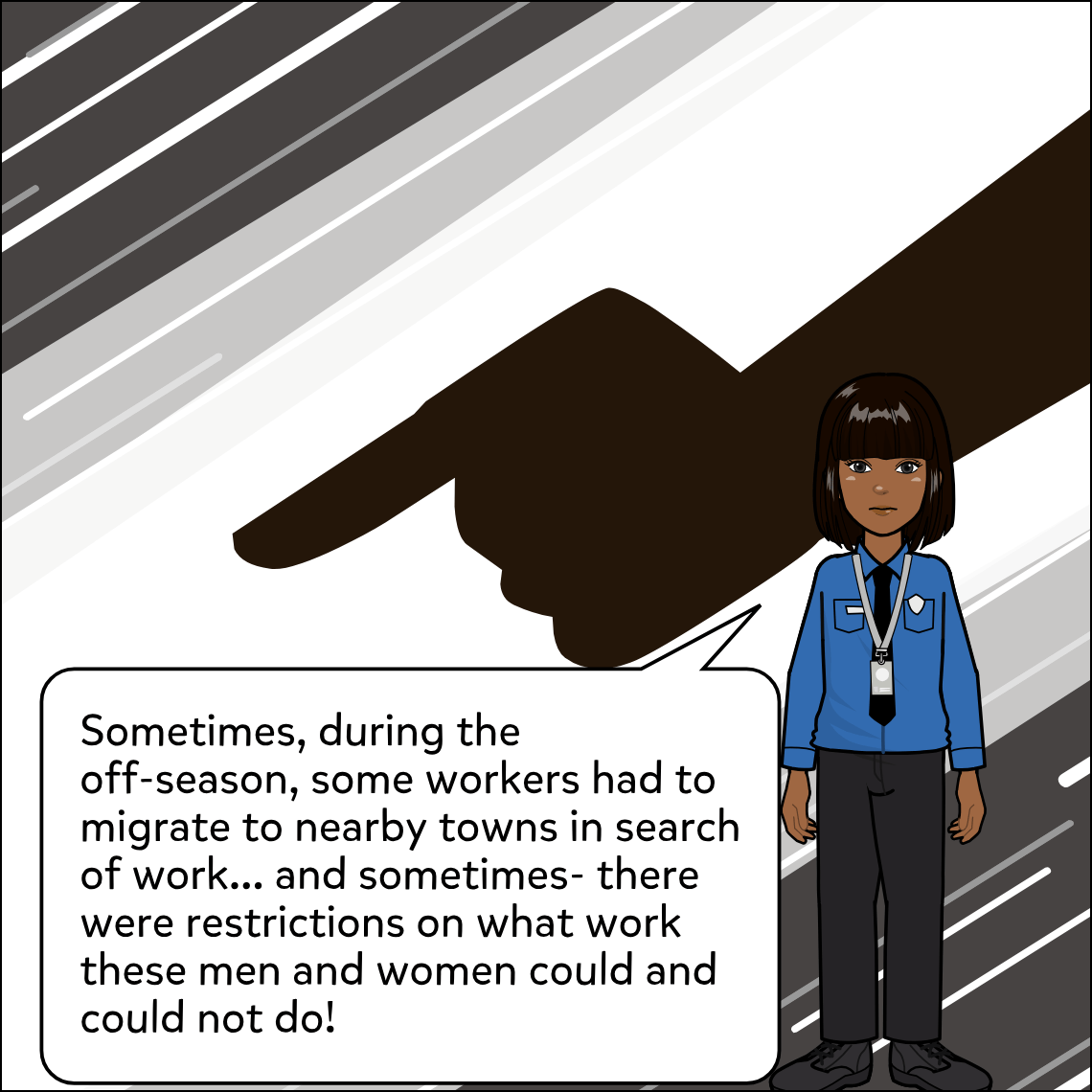
Panel 17 of 37 Transcript
- MughilSometimes, during the off-season, some workers had to migrate to nearby towns in search of work... and sometimes- there were restrictions on what work these men and women could and could not do!
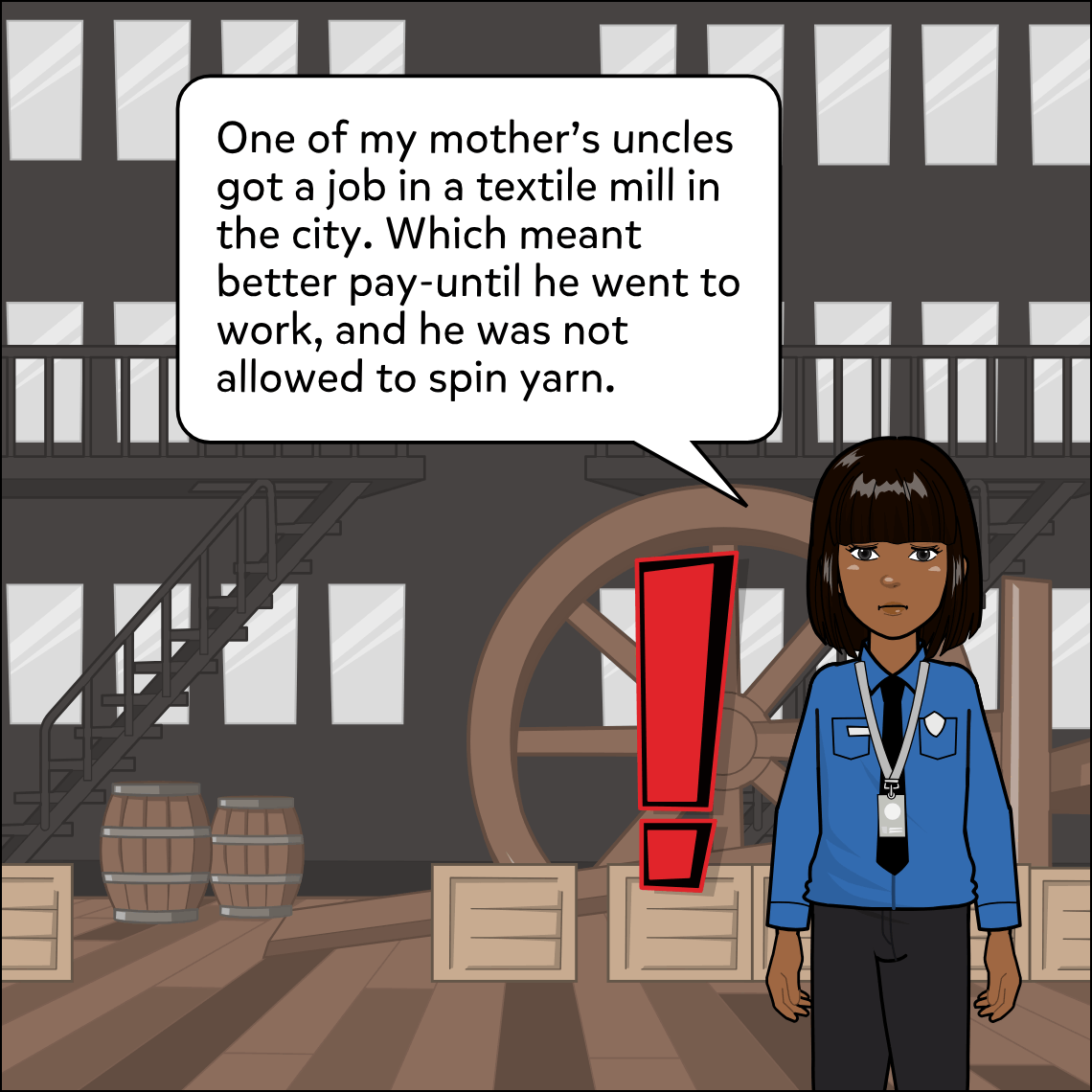
Panel 18 of 37 Transcript
- MughilOne of my mother's uncles got a job in a textile mill in the city. Which meant better pay-until he went to work, and he was not allowed to spin yarn.
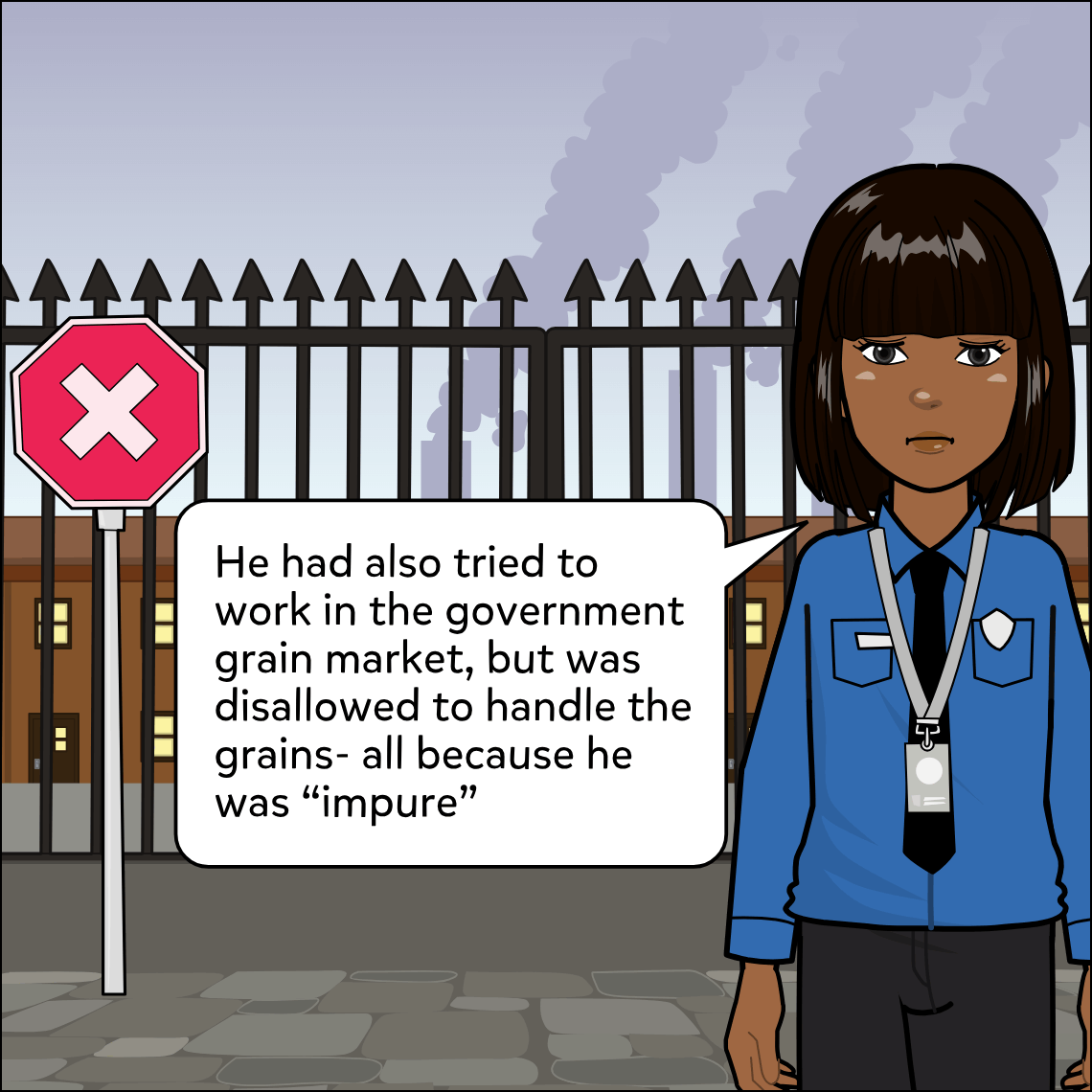
Panel 19 of 37 Transcript
- MughilHe had also tried to work in the government grain market, but was disallowed to handle the grains- all because he was "impure"
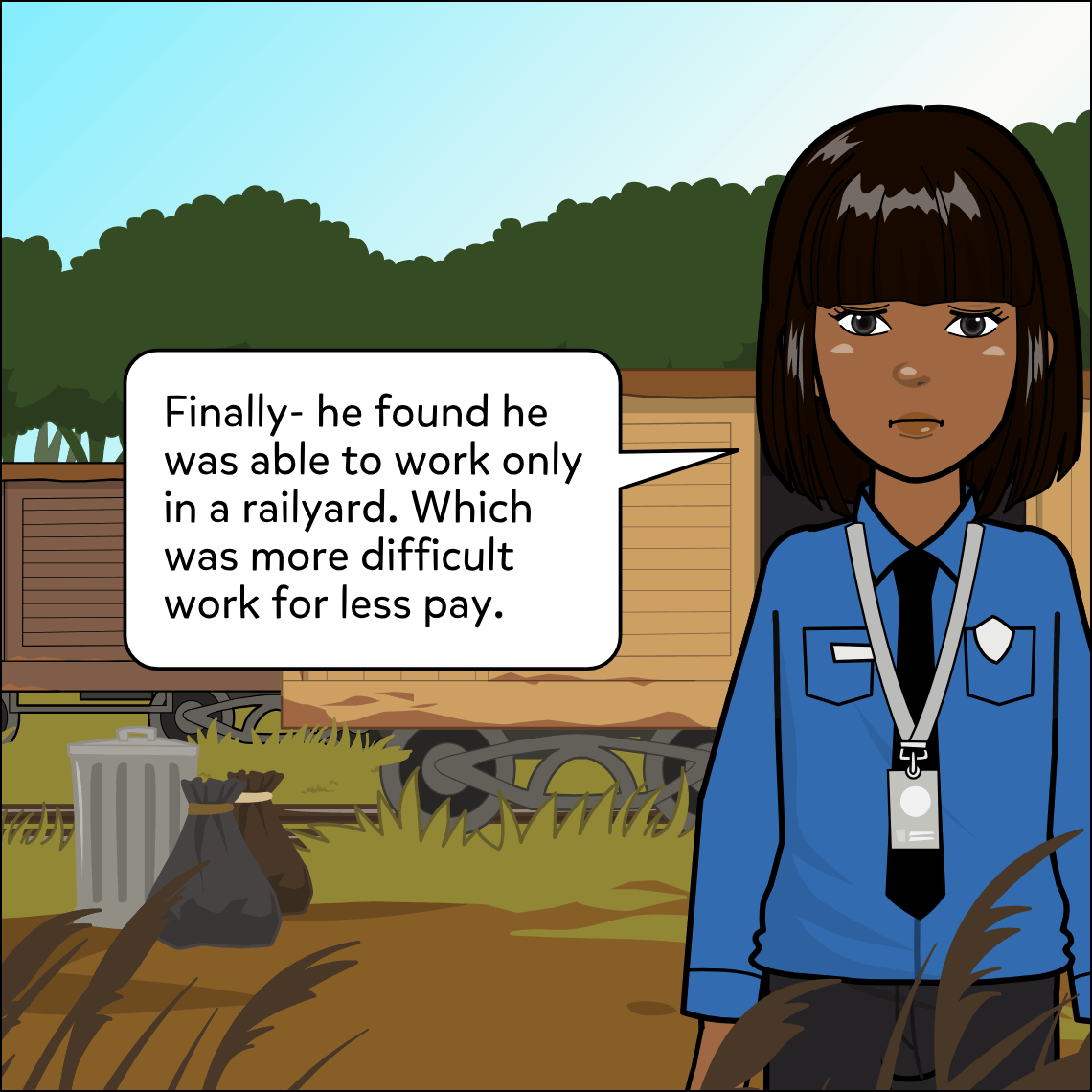
Panel 20 of 37 Transcript
- MughilFinally- he found he was able to work only in a railyard. Which was more difficult work for less pay.
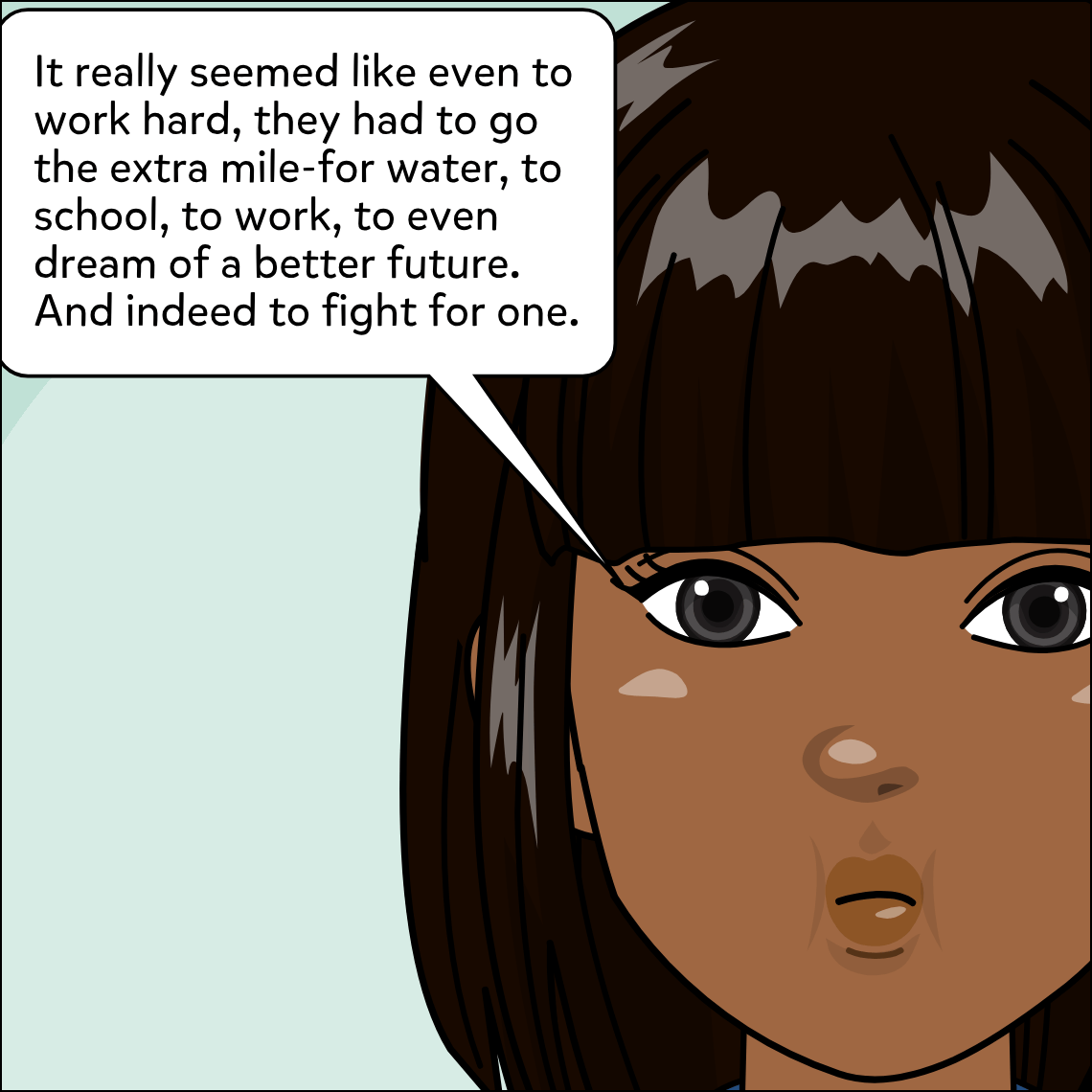
Panel 21 of 37 Transcript
- MughilIt really seemed like even to work hard, they had to go the extra mile-for water, to school, to work, to even dream of a better future. And indeed to fight for one.
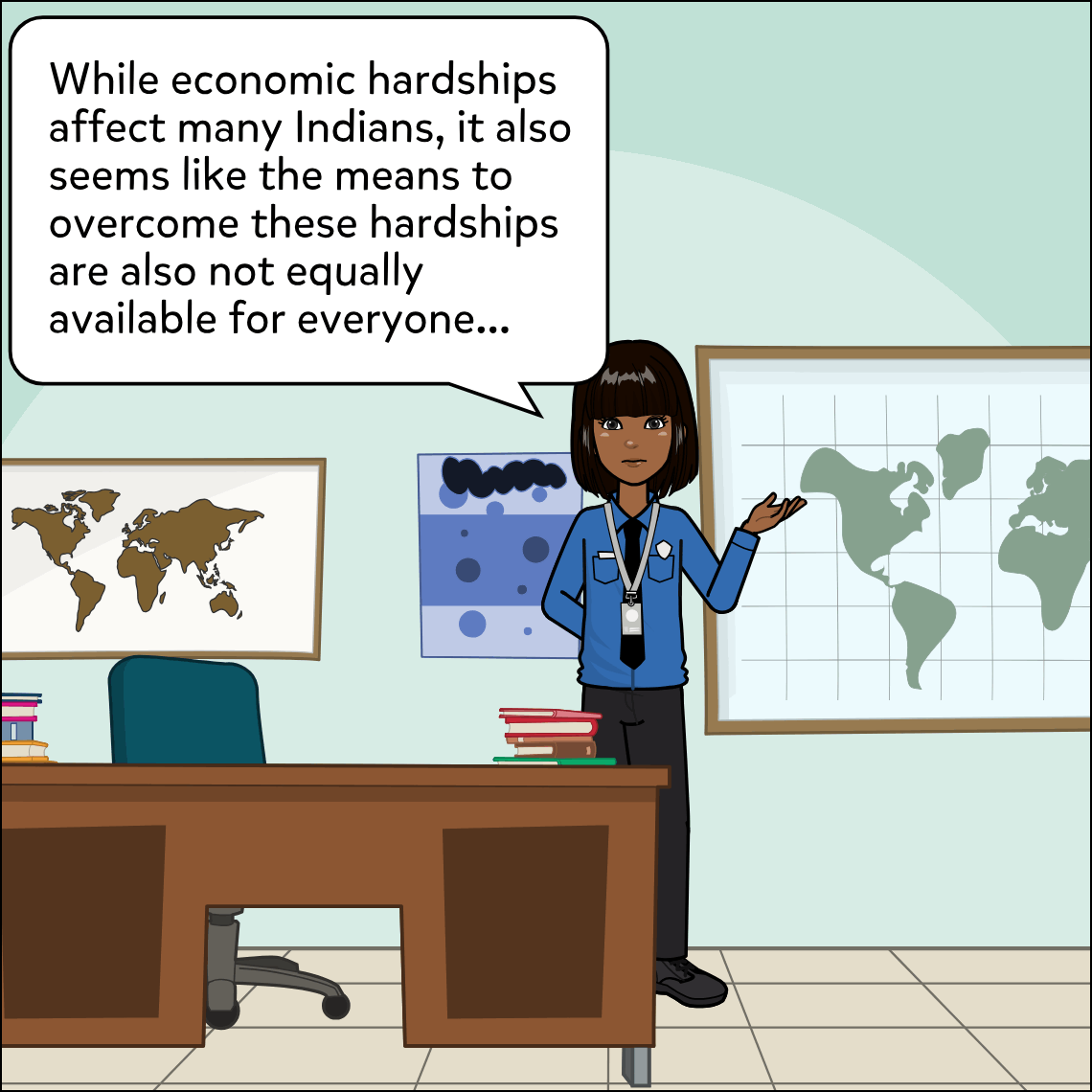
Panel 22 of 37 Transcript
- MughilWhile economic hardships affect many Indians, it also seems like the means to overcome these hardships are also not equally available for everyone...
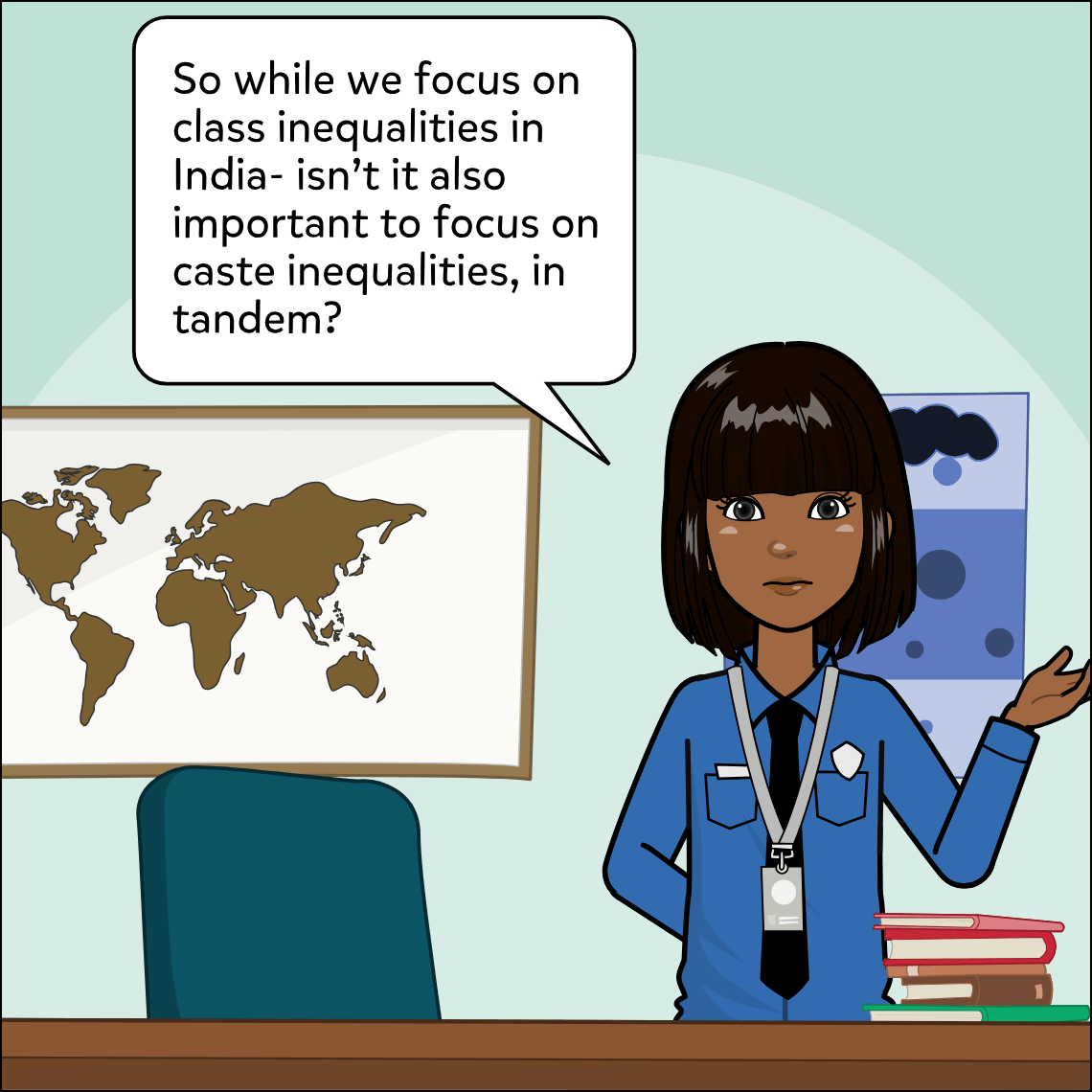
Panel 23 of 37 Transcript
- MughilSo while we focus on class inequalities in India- isn't it also important to focus on caste inequalities, in tandem?
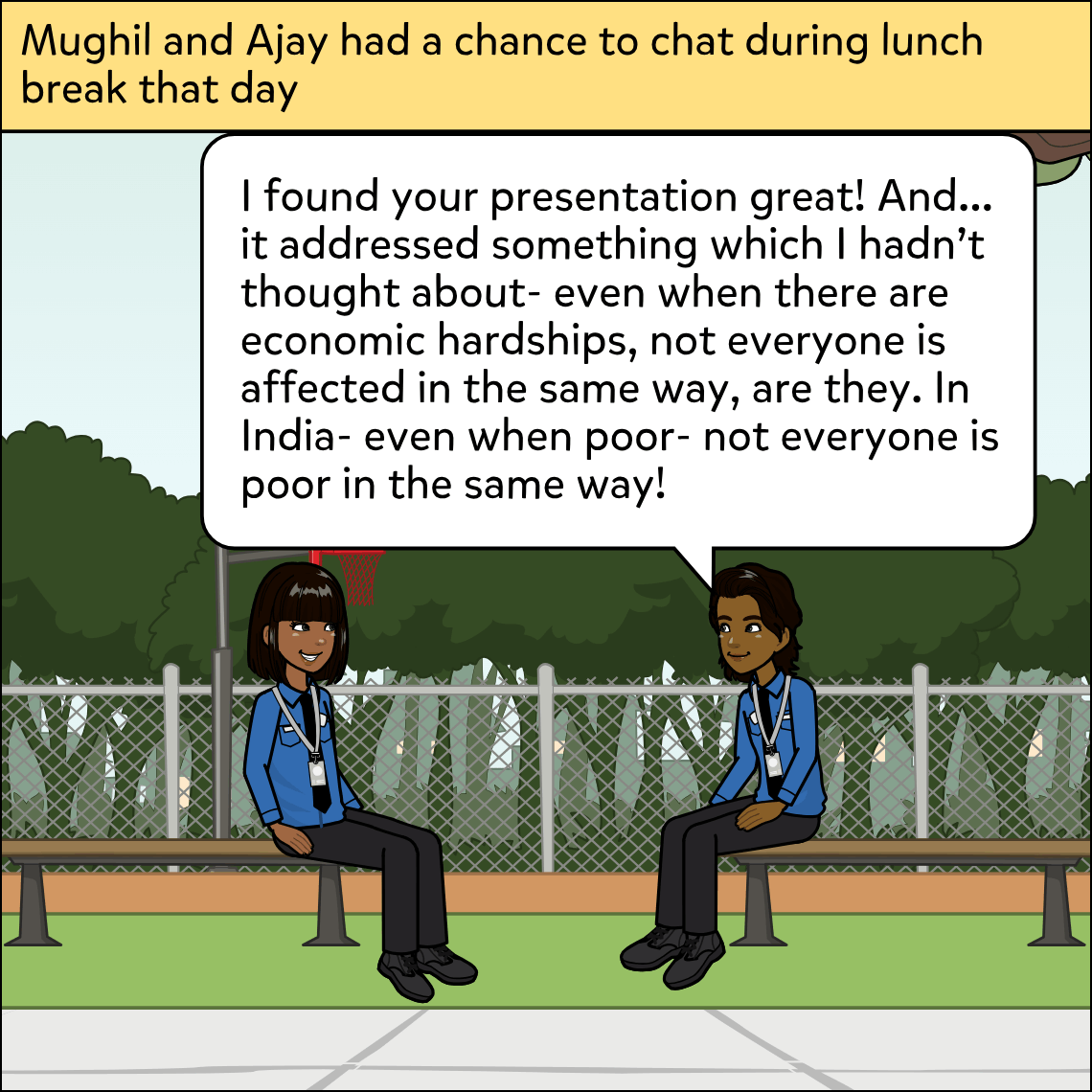
Panel 24 of 37 Transcript
- CaptionMughil and Ajay had a chance to chat during lunch break that day
- AjayI found your presentation great! And... it addressed something which I hadn't thought about- even when there are economic hardships, not everyone is affected in the same way, are they. In India- even when poor- not everyone is poor in the same way!
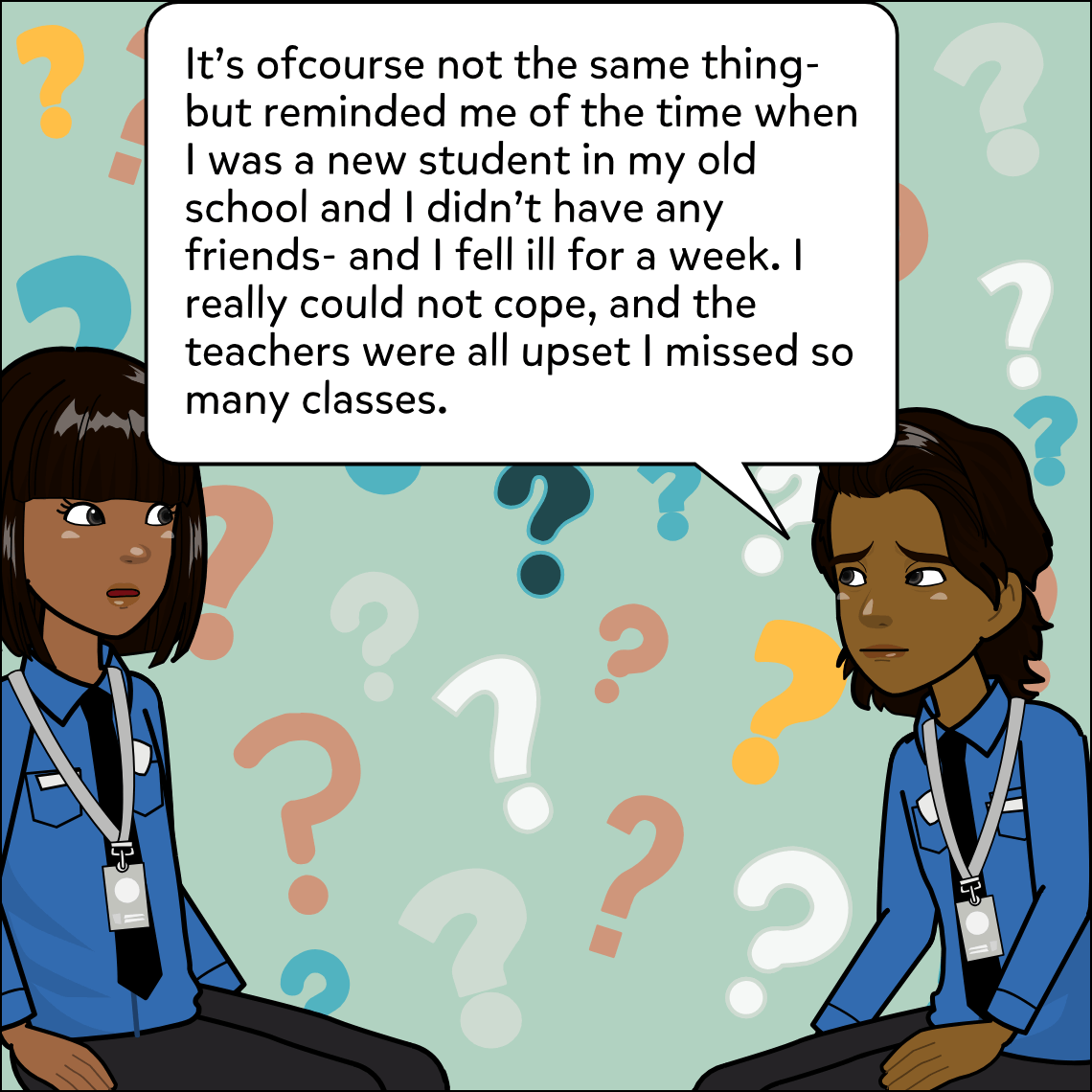
Panel 25 of 37 Transcript
- AjayIt's ofcourse not the same thing- but reminded me of the time when I was a new student in my old school and I didn't have any friends- and I fell ill for a week. I really could not cope, and the teachers were all upset I missed so many classes.
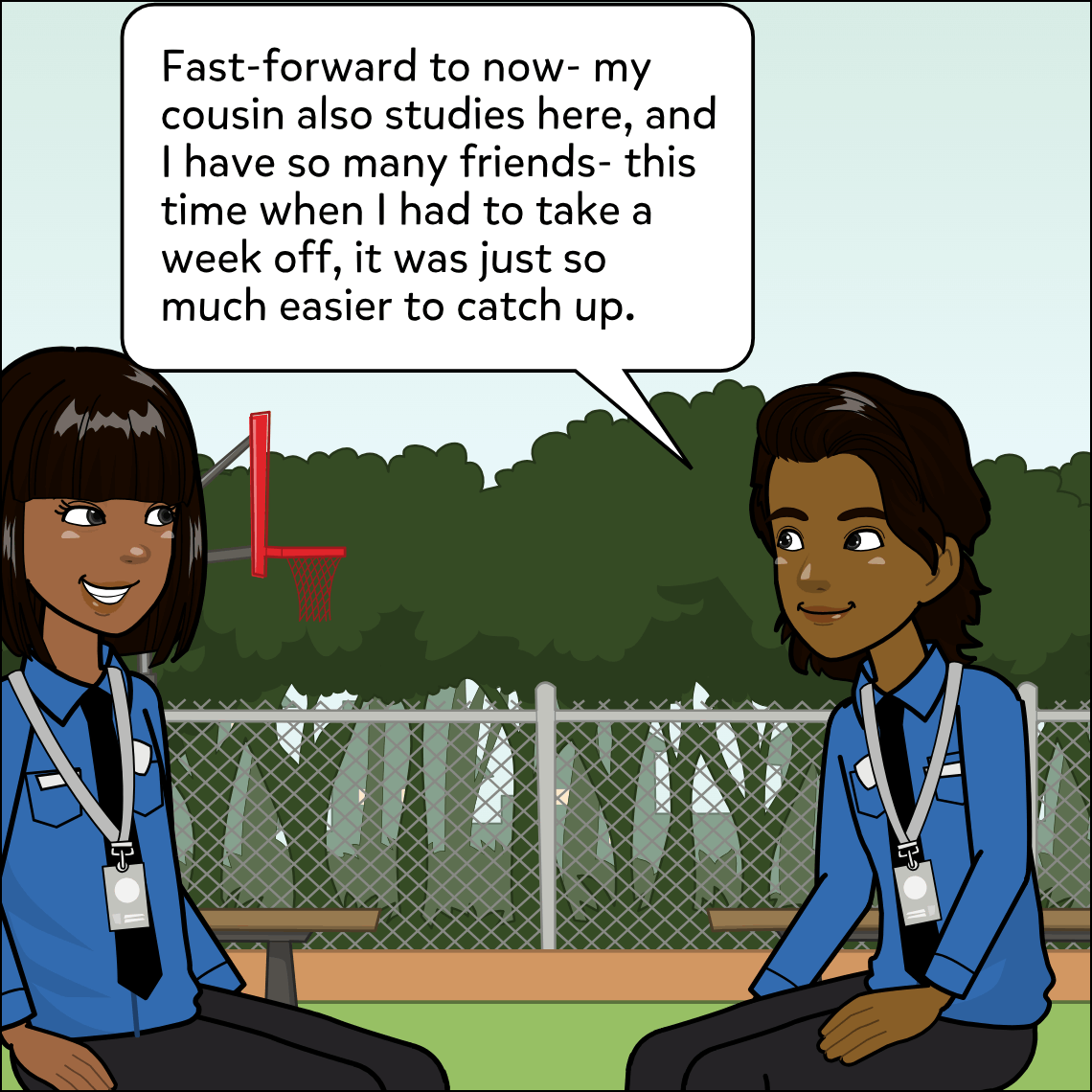
Panel 26 of 37 Transcript
- AjayFast-forward to now- my cousin also studies here, and I have so many friends- this time when I had to take a week off, it was just so much easier to catch up.
Panel 27 of 37 Transcript
- AjayEven if the situations were similar-my access to friends and teachers and resources made so much difference.
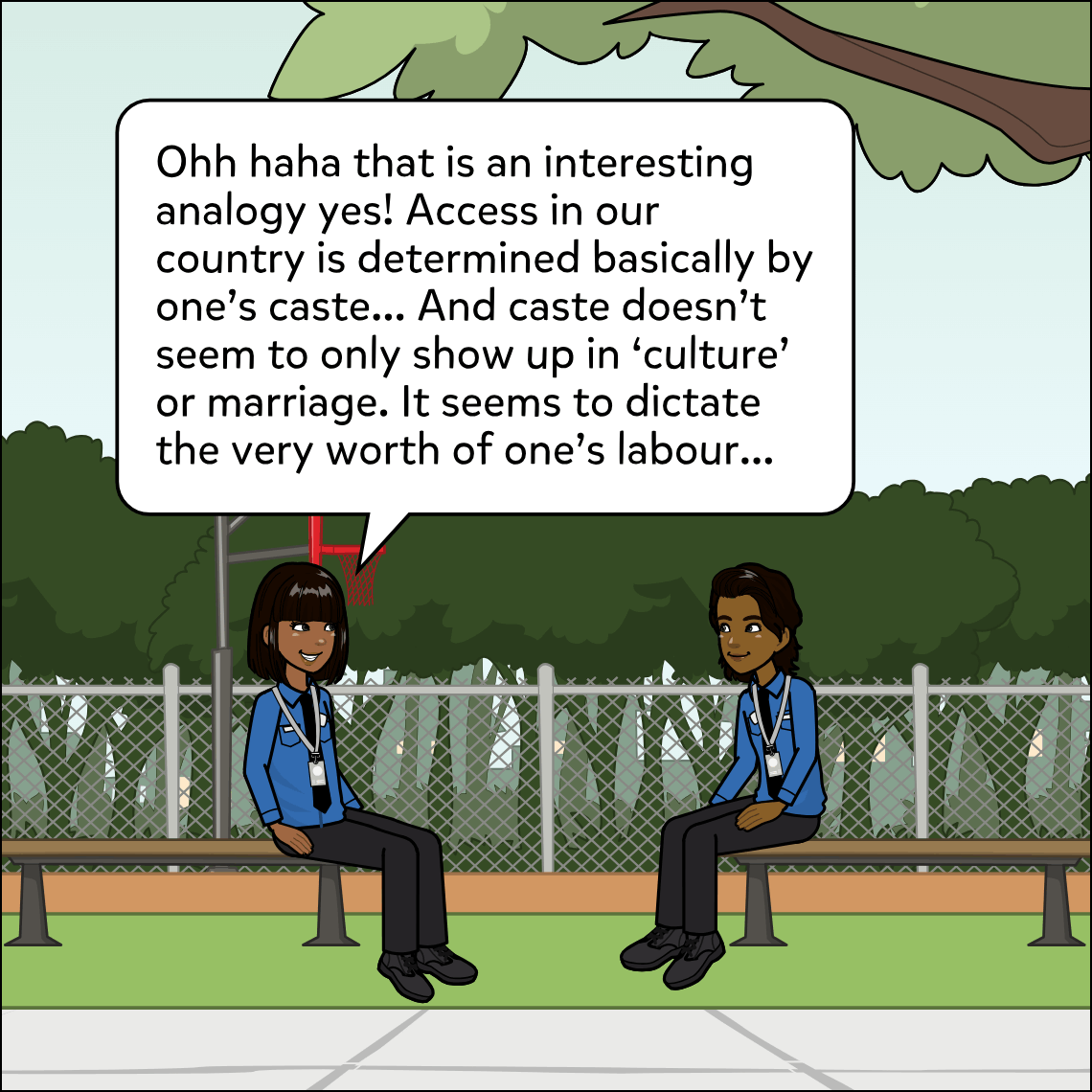
Panel 28 of 37 Transcript
- MughilOhh haha that is an interesting analogy yes! Access in our country is determined basically by one’s caste... And caste doesn’t seem to only show up in ‘culture’ or marriage. It seems to dictate the very worth of one’s labour...
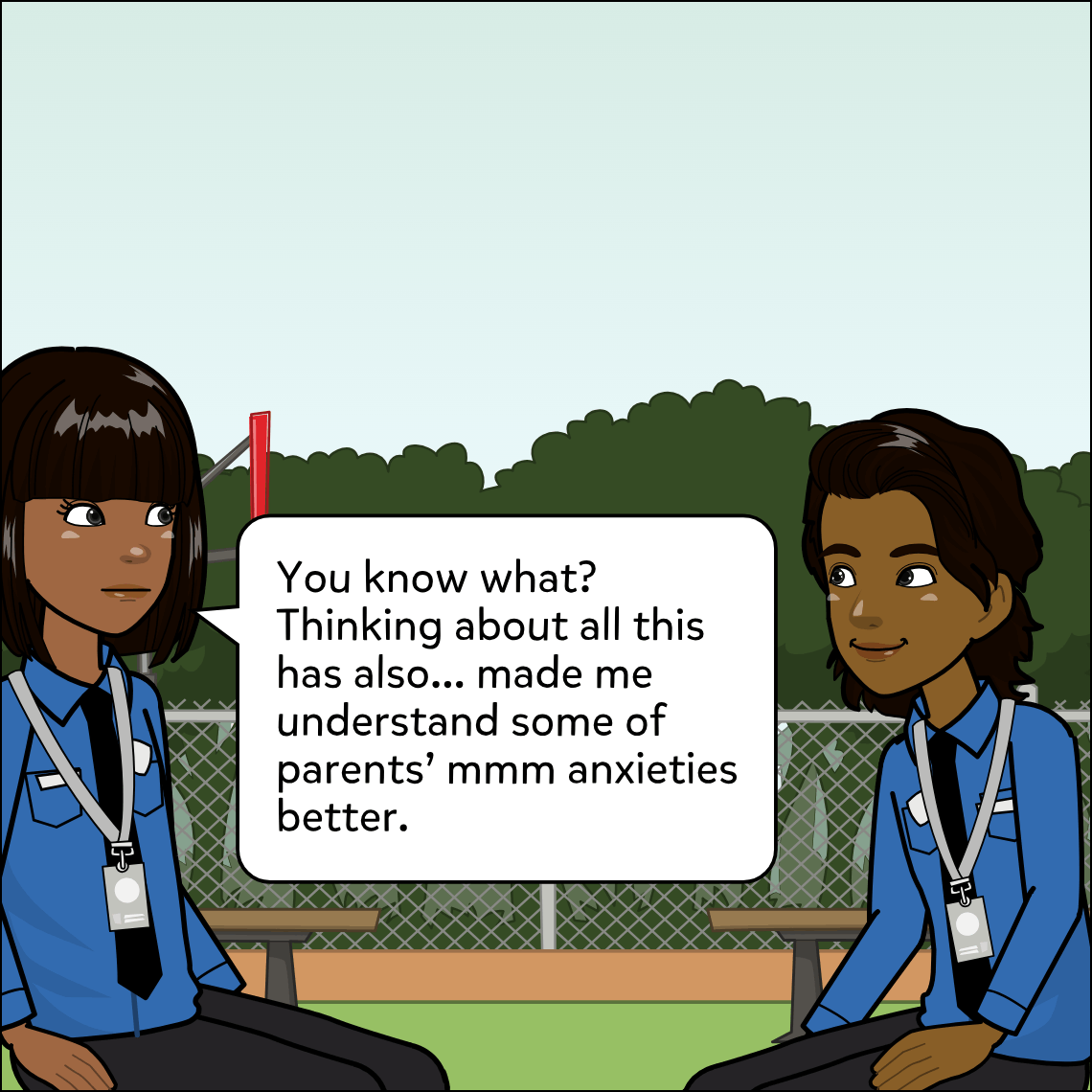
Panel 29 of 37 Transcript
- MughilYou know what? Thinking about all this has also... made me understand some of parents’ mmm anxieties better.
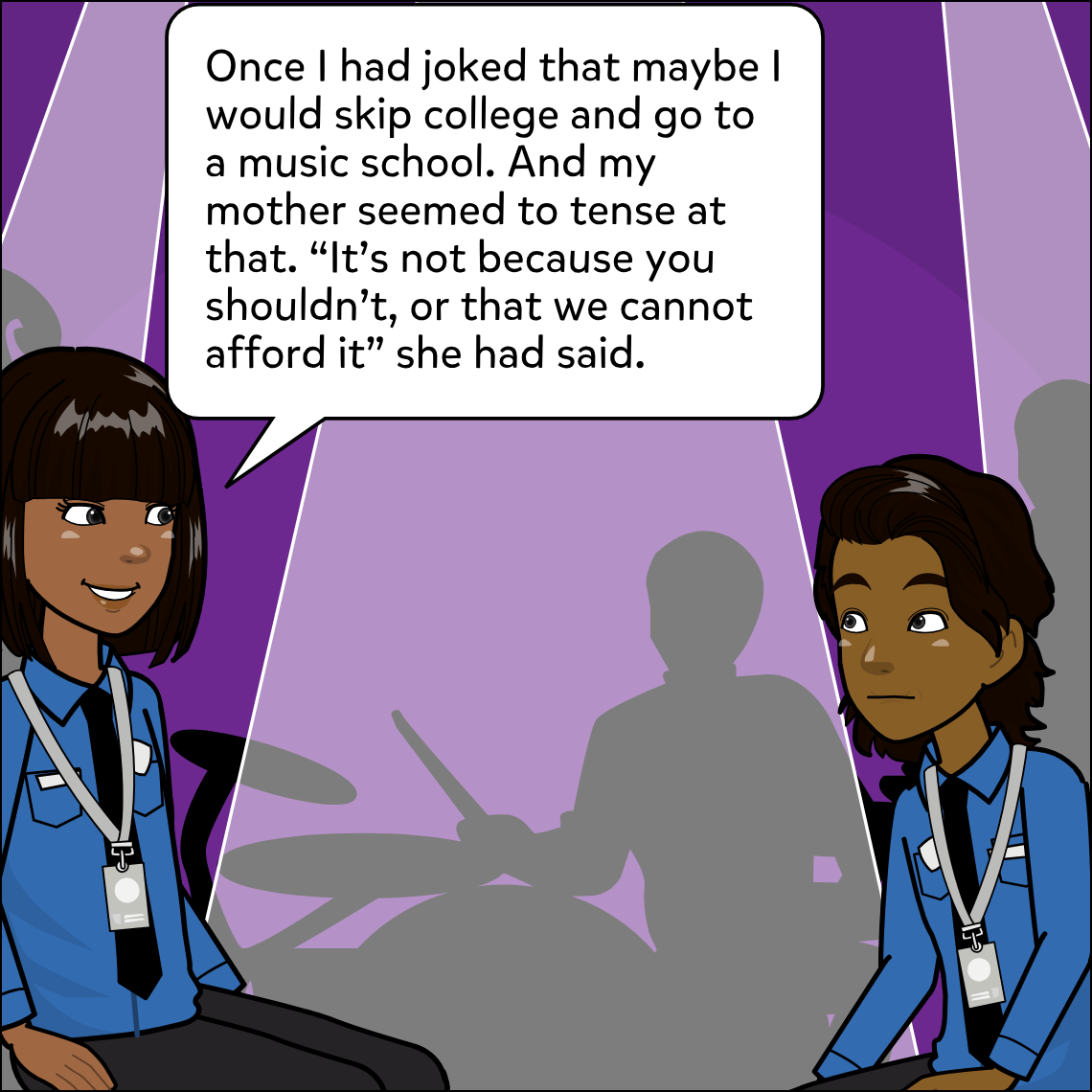
Panel 30 of 37 Transcript
- MughilOnce I had joked that maybe I would skip college and go to a music school. And my mother seemed to tense at that. “It’s not because you shouldn’t, or that we cannot afford it” she had said.
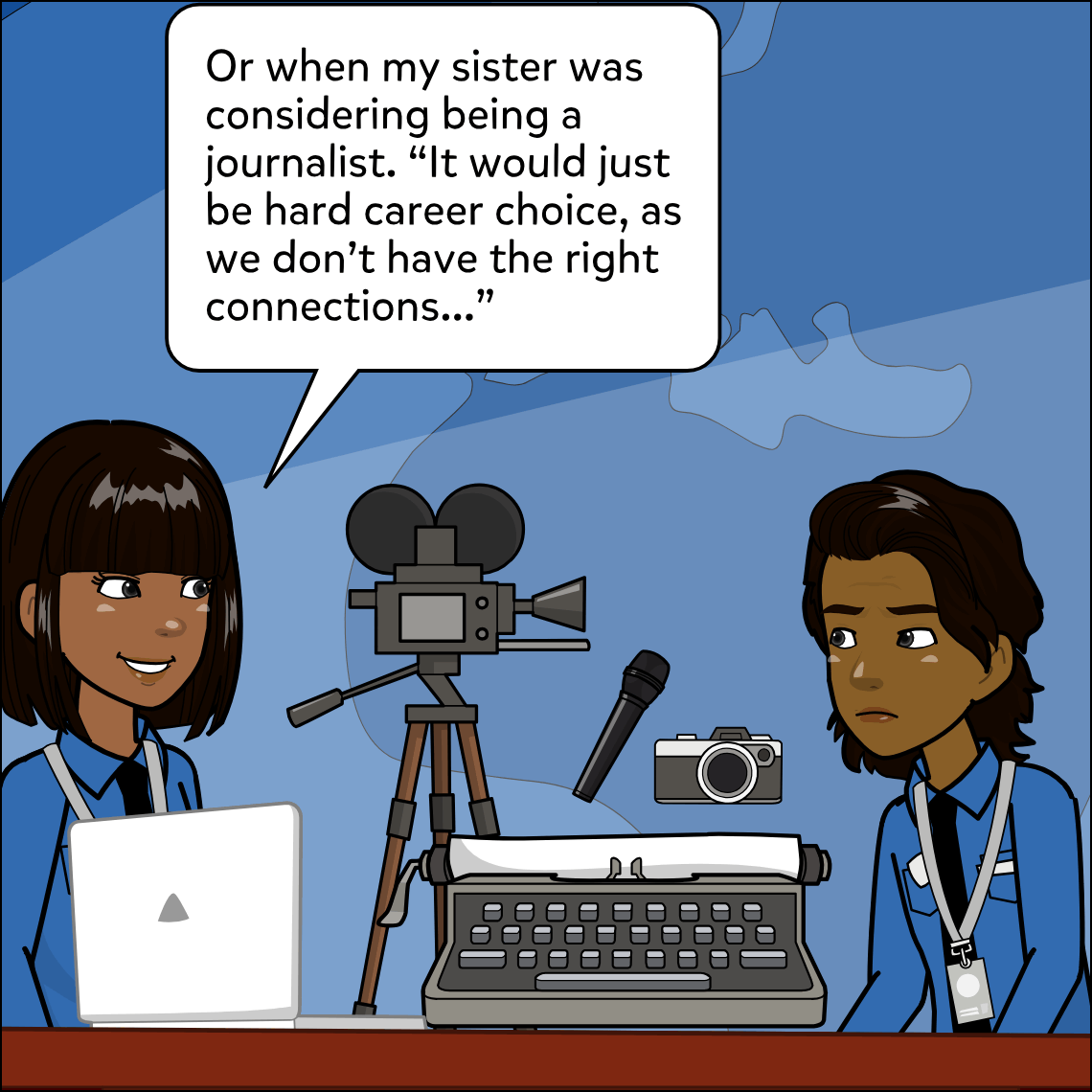
Panel 31 of 37 Transcript
- MughilOr when my sister was considering being a journalist. “It would just be hard career choice, as we don’t have the right connections...”
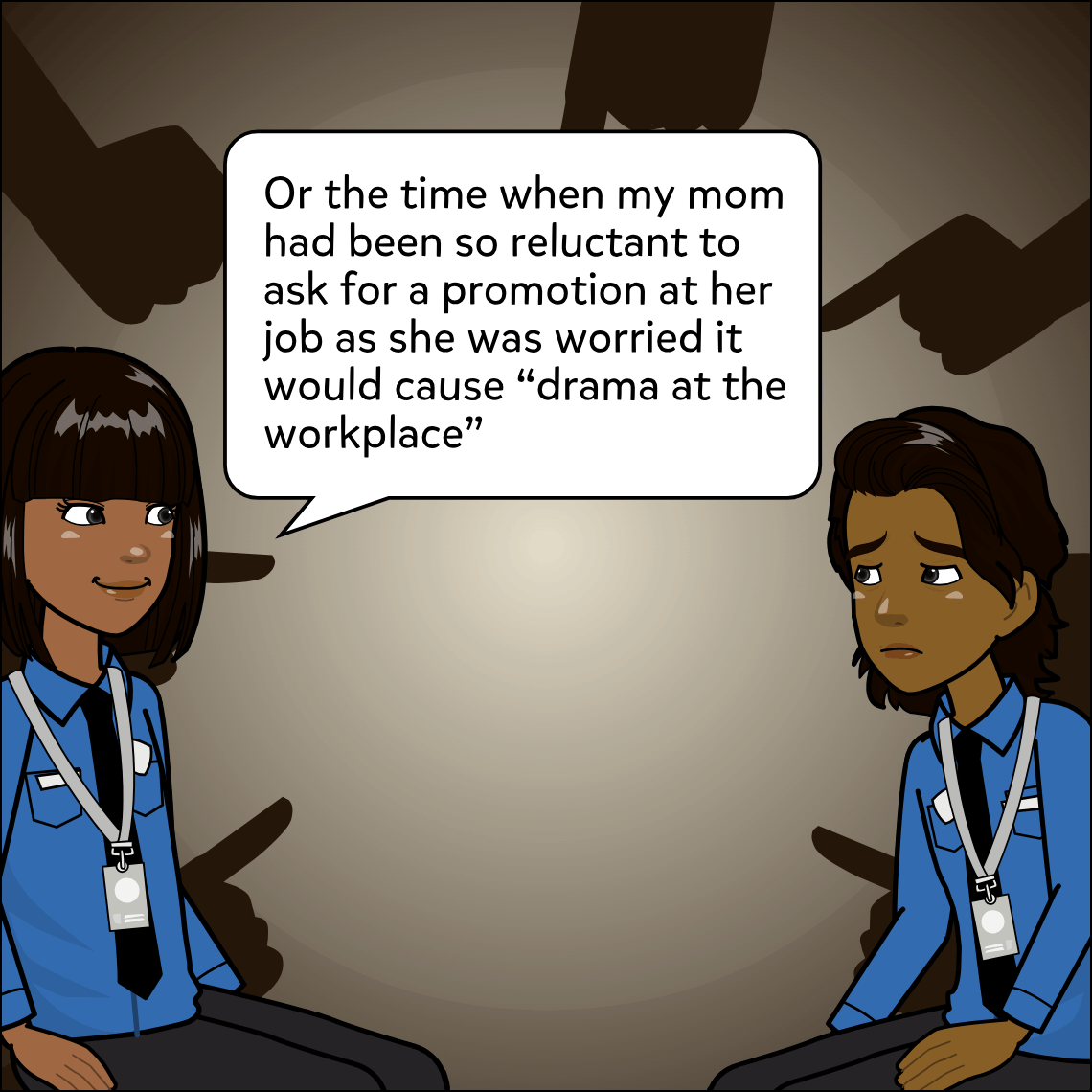
Panel 32 of 37 Transcript
- MughilOr the time when my mom had been so reluctant to ask for a promotion at her job as she was worried it would cause “drama at the workplace”

Panel 33 of 37 Transcript
- MughilI do not want to be anxious or scared... back then I was just annoyed at all of these reactions, but now I can see...
Panel 34 of 37 Transcript
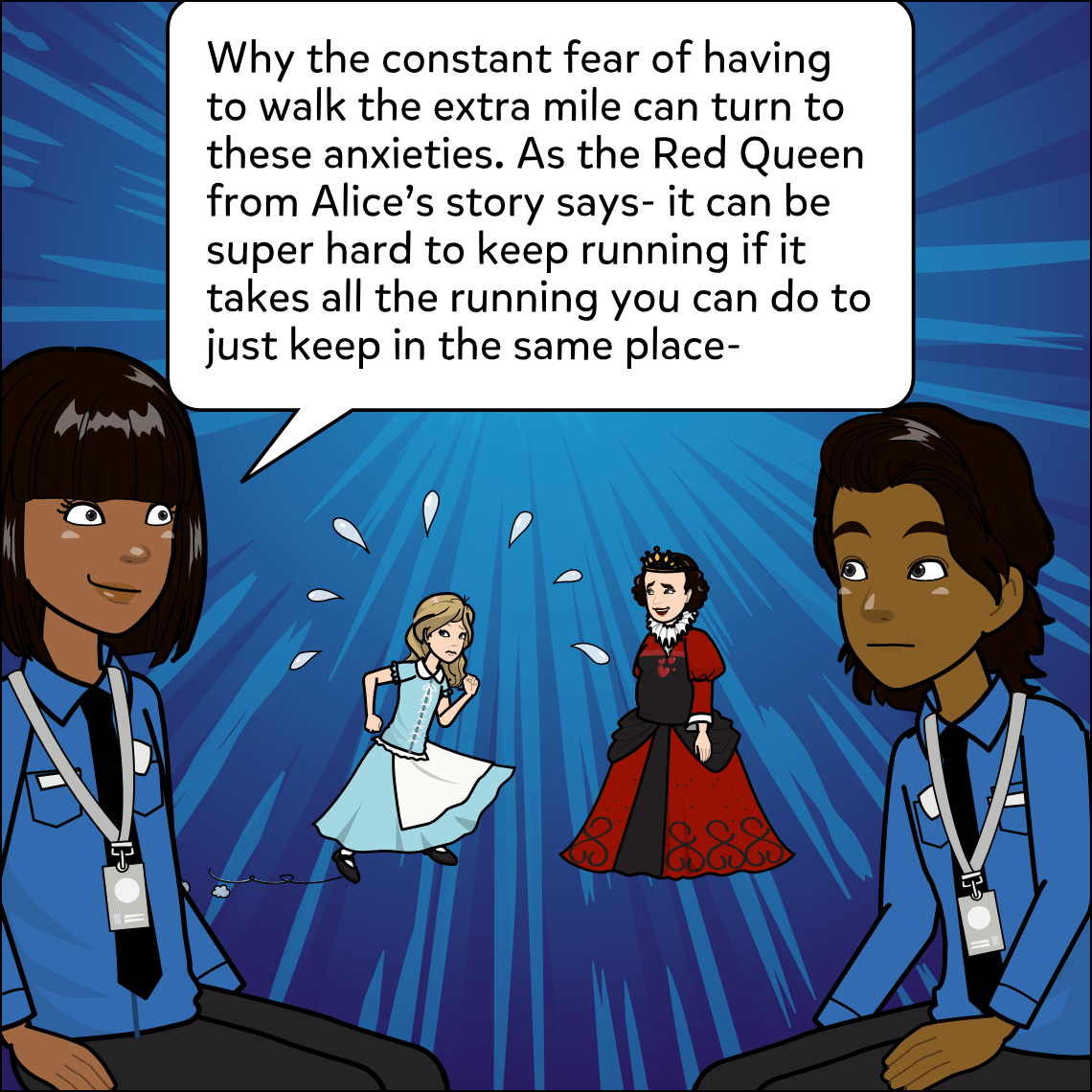
- MughilWhy the constant fear of having to walk the extra mile can turn to these anxieties. As the Red Queen from Alice’s story says- it can be super hard to keep running if it takes all the running you can do to just keep in the same place-
Panel 35 of 37 Transcript
- MughilWhich is why a clear analysis of ourselves, and the systems which operate our lives, is so crucial! Only then can we all work together towards systemic change.
Panel 36 of 37 Transcript
- CaptionInspired from “Towards a Marxist Analysis of Caste” by Gail Omvedt
Panel 37 of 37 Transcript
- CaptionAn excerpt from the paper: “These [caste] factors are not simply ‘cultural’ but part of this family’s relation to the means of production- that is its class position; and the main objective material base for the ability of the rich landlords to disrupt the unity of Maratha and Dalit labourers”
First published at https://akscusa.squarespace.com/comics.